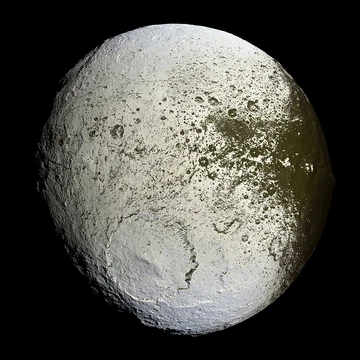
Rim (crater)
The raised edge of an impact crater, varying with size and gravity.

Wikipedia / Wikimedia Commons
The rim of an impact crater is the portion that extends above the local surface, typically forming a circular or elliptical edge. In simple craters, the rim geometry resembles those found on the Moon and Mercury, while complex craters—those larger than 2.3 km in diameter—can have rims reaching several hundred meters in height. The rim's exact height is influenced by melt pushed over the crest during impact and subsequent weathering, making average height determination difficult.
- field
- Impact crater geology
- known_for
- Elevated edge of impact craters, with height:diameter ratios varying between Earth and Moon
- classification_types
- Full-rim craters, broken-rim craters, depressions
Lore & Background
The rim of an impact crater is defined as the part that extends above the height of the local surface, usually in a circular or elliptical pattern. In a more specific sense, the rim may refer to the uppermost tip of this raised portion. If no raised portion exists, the rim is simply the inside edge where the flat surface meets the curve of the crater bottom. Simple craters, which are smaller, retain rim geometries similar to those found on the Moon and Mercury. Complex craters, with diameters greater than 2.3 km, are distinguished by central uplifts and can form rims up to several hundred meters in height.
Reader's Guide
The rim of an impact crater is a key feature for understanding impact processes and planetary geology. Its formation involves melt being pushed over the initial crest, increasing height, while subsequent weathering from atmospheric erosion complicates measurement. The slope along the excavated interior can produce spur-and-gully morphology and mass wasting events due to slope instability and seismic activity. A notable observation is that complex crater rims on Earth have 5 to 8 times greater height:diameter ratios than those on the Moon, attributed to differences in gravitational acceleration between the colliding bodies. This gravitational force also directly relates to crater depth and melt volume. Reverse faulting and thrusting at the final rim are proposed as main factors in forming the elevated rim. When formed on a sloped surface, the rim becomes asymmetric, and as the angle of repose increases, the crater profile becomes more elongate. Rim classification includes full-rim craters, broken-rim craters, and depressions.
Did You Know?
- Complex craters have diameters greater than 2.3 km and can form rims up to several hundred meters in height.
- Earth's complex crater rims have 5 to 8 times greater height:diameter ratios than those on the Moon.
- Melt pushed over the crest of the initial rim can increase the rim's overall height.
- Reverse faulting and thrusting at the final crater rim are proposed as main factors in forming the elevated rim.
More in Impact craters 1-18
Spotted an error? Know more?
This is a living reference — every entry is fact-audited, and reader corrections feed straight into our audit queue. Suggest an edit · See this site's audit record